A studio whose work lives offline
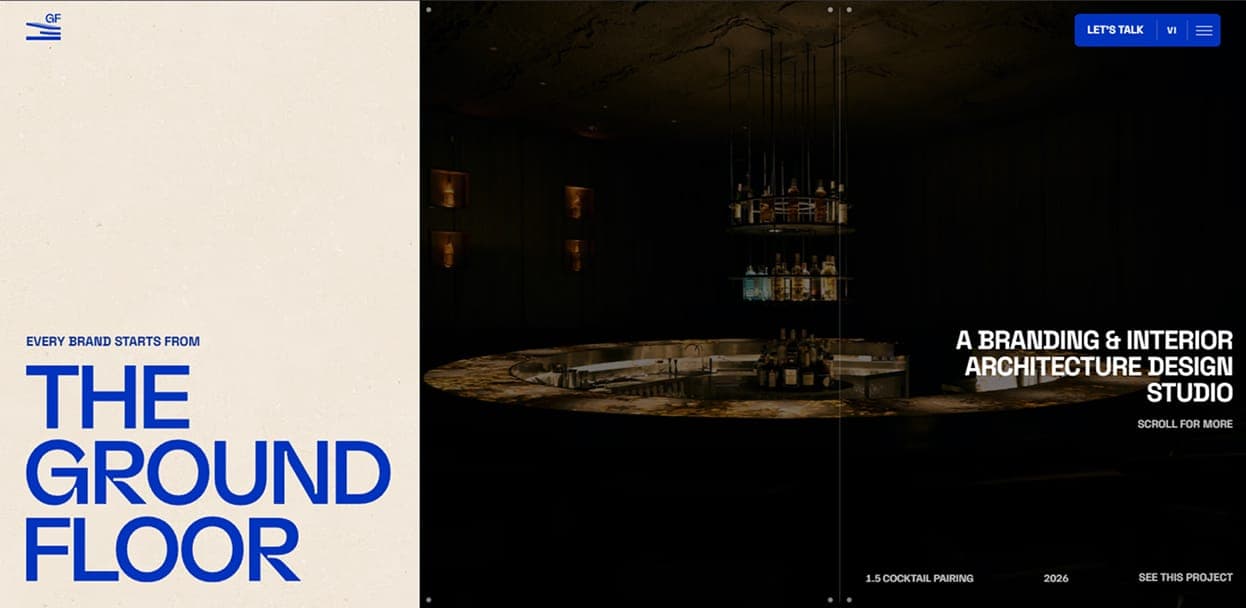
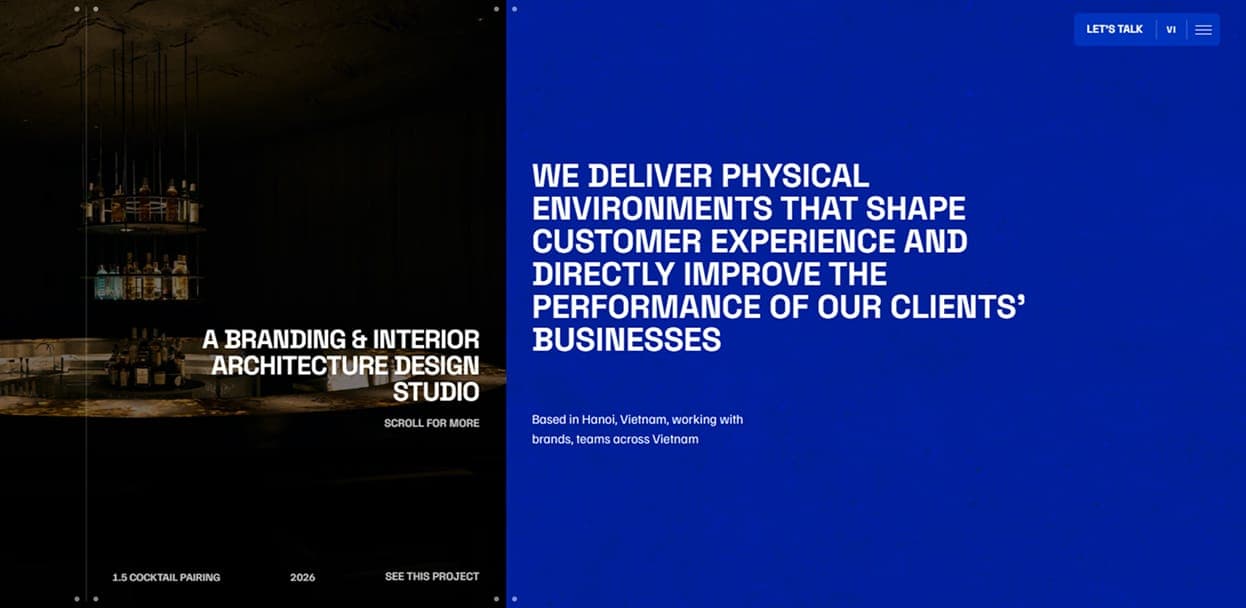
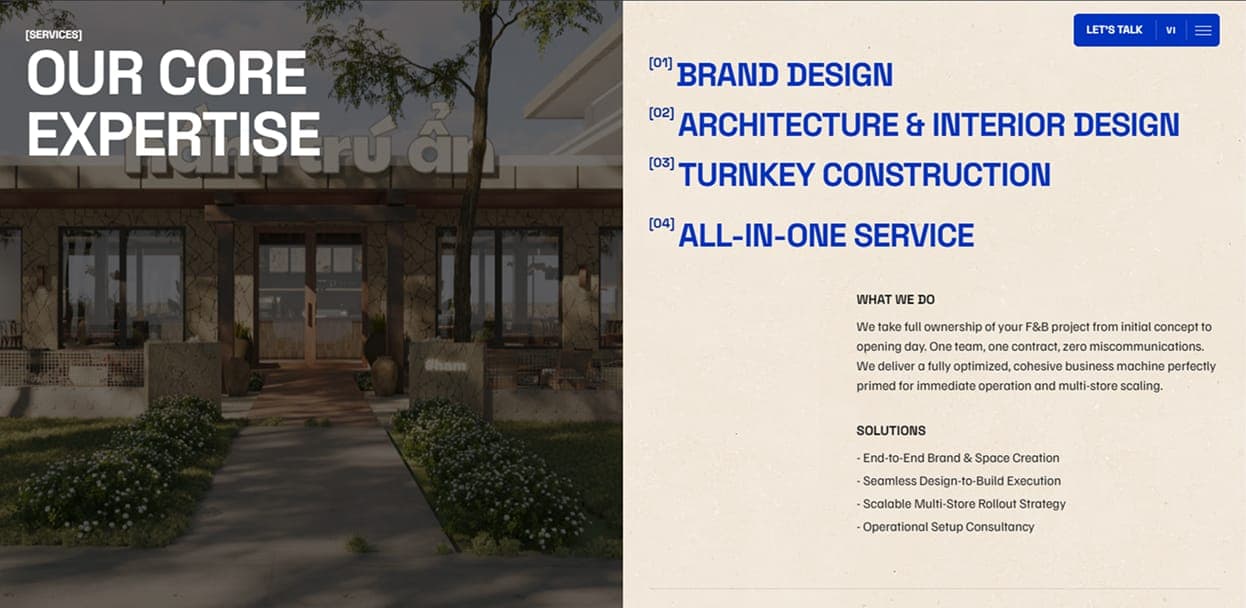
The Ground Floor is a branding and interior architecture studio in Hanoi that designs F&B spaces: bars, cafés and restaurants, from the brand identity down to the construction. Their work is physical. The website had to make it felt through a screen, and convince founders that one team can carry a project from concept to opening day.
They also needed to run the site themselves, in English and Vietnamese, without calling a developer every time a project wrapped.
Let the spaces do the talking
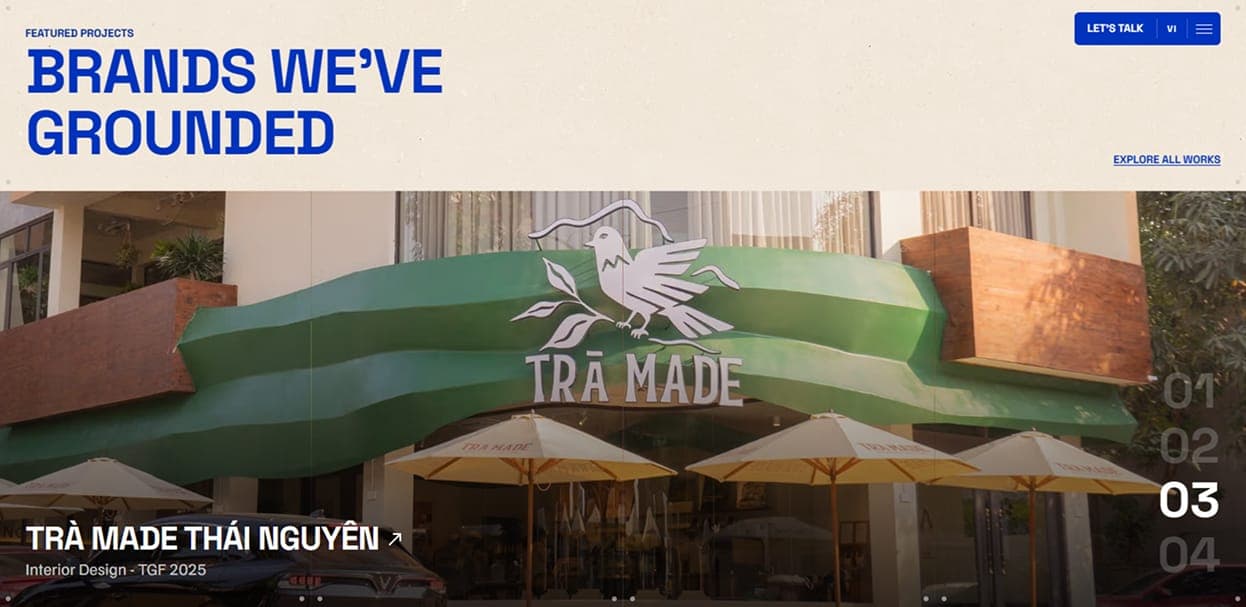
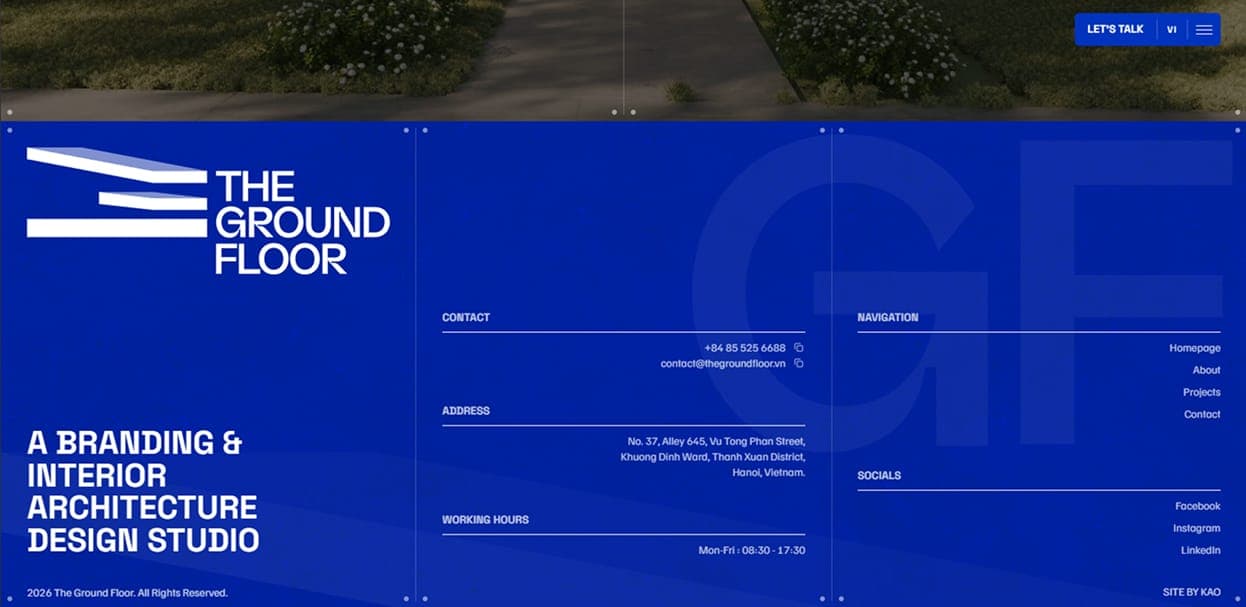
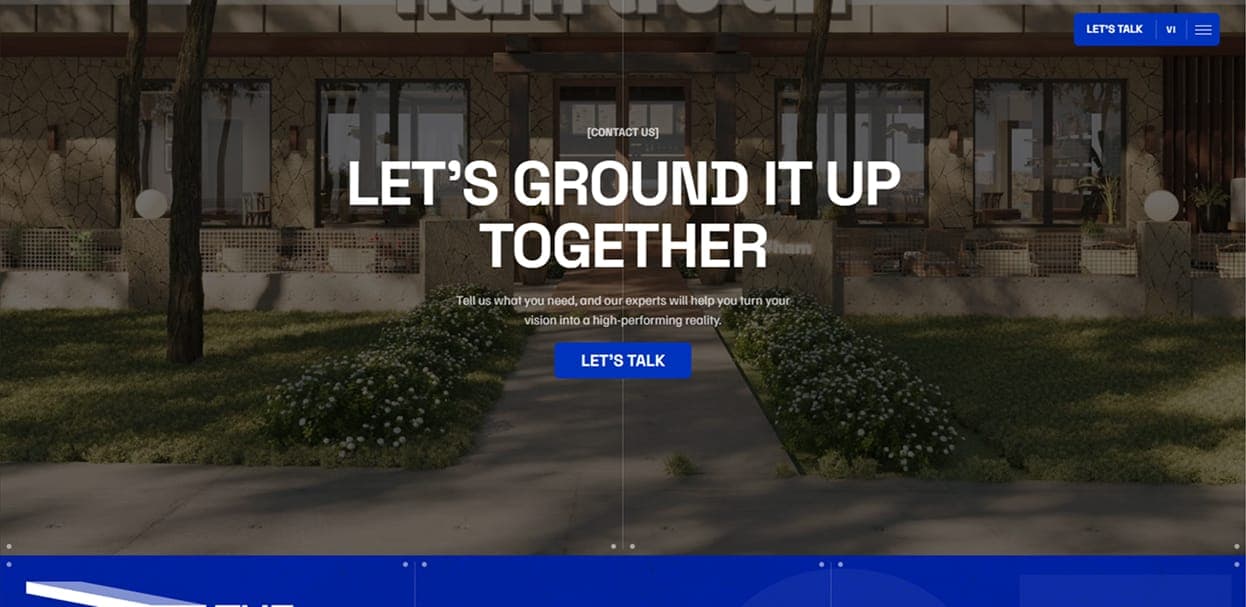
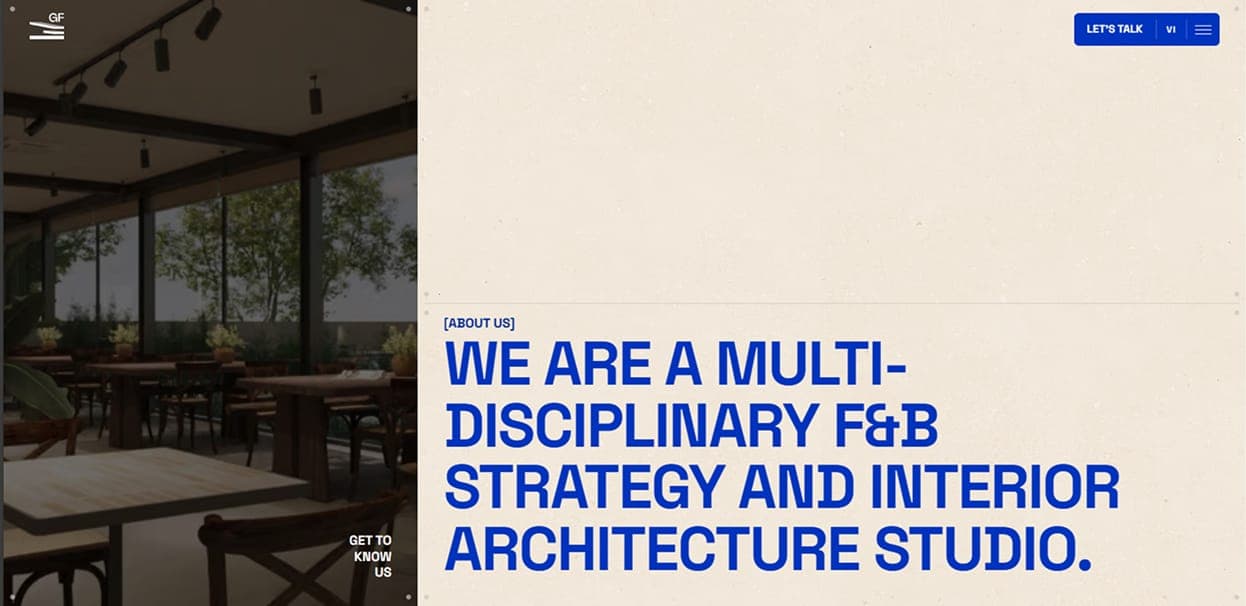
Their projects are photographed beautifully, so the design stays out of the way: large imagery, a warm paper texture, one strong blue, and bold grotesk type with Space Grotesk for headings and Familjen Grotesk for text.
Motion is where the site gets its character. The home page opens with the logo drawing itself line by line, then turns into a horizontal hero that slides into a featured project. Services, featured projects and the three philosophy pillars each have their own scroll choreography, built with GSAP and Lenis smooth scrolling.
A site the team can run on its own
I built it with Next.js and Sanity. Every page, service and project is editable from the CMS, in both languages.
Project pages are assembled from modules (hero, full-width image, carousel, content blocks, overview), so the team can tell each project's story in its own order without needing a new template.
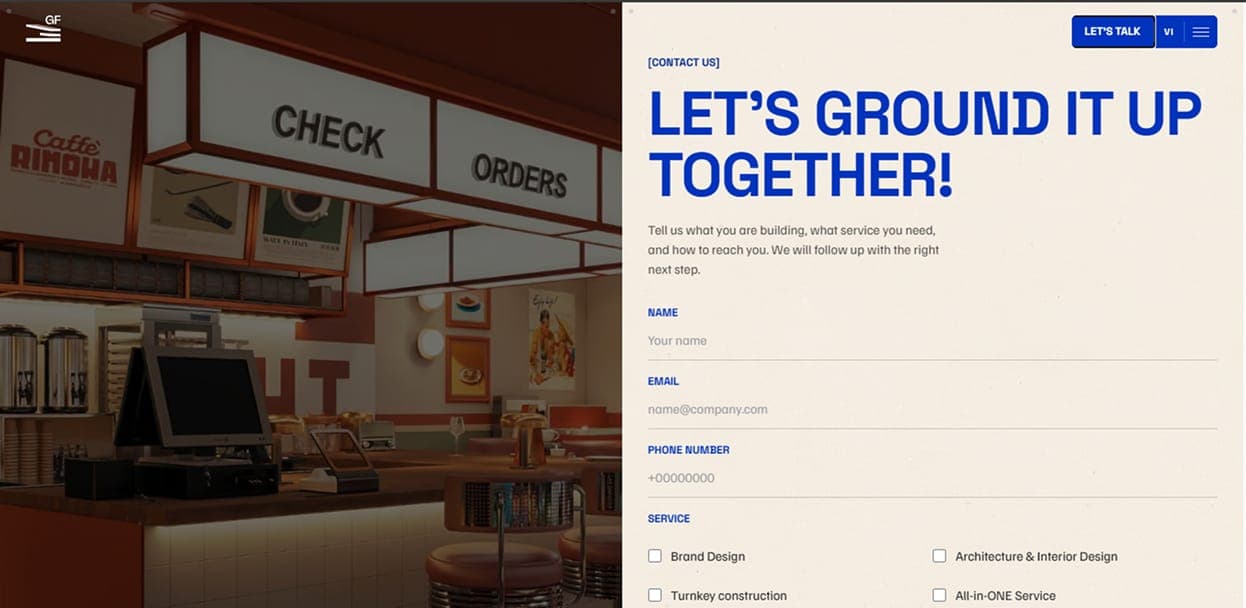
- Contact form that stores leads in Sanity, sends an email notification through Resend, and exports to CSV.
- SEO per page: meta titles, descriptions and social images editable from the CMS.
- Accessible motion: animations and smooth scrolling switch off for people who prefer reduced motion.
After launch, I ran performance and accessibility audits: deferring heavy components, fixing image sizes, and adding analytics to see how visitors actually use the site.
Motion is a budget
An animation-heavy site is easy to make beautiful and easy to make slow. On this project I learned to treat motion like a budget: each effect had to earn its place, respect reduced motion, and never get in the way of the content.
Handing over a CMS is design work too. Modular project pages took longer to build than fixed templates, but they mean the studio can publish its work without me.